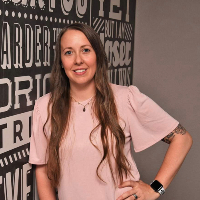
Tiffany Thornton, LPC
Therapist in Wisconsin
Tiffany Thornton is a licensed professional counselor (LPC) who focuses on relationship and intimacy concerns.
- License 7174-125 · Wisconsin Expires February 2027
- NPI 1982149399 · national registry
- Experience and languages 8+ years in practice English
Details are as listed on the therapist's public professional profile. You can check any license with the state board and any NPI with the national registry.
About Tiffany
Tiffany Thornton is a licensed professional counselor (LPC) who focuses on relationship and intimacy concerns. She brings eight years of clinical experience and a practical approach that aims to help people navigate stress, anxiety, grief, and life changes. She uses straightforward conversation and active listening to help clients identify what matters to them.
Tiffany draws on several approaches, including the Gottman Method, attachment-based ideas, and cognitive behavioral tools. Sessions are goal-oriented and adapt to each person's situation.
Background and approach
Tiffany's own life as a single parent and member of a blended household shaped her perspective. Those experiences inform the way she talks about parenting, blended family issues, communication problems, and midlife transitions. She also works with concerns such as infidelity, codependency, and self-esteem struggles.
She is an ally to the LGBT community and offers support for people facing stigma or identity-related stress. Tiffany will help people who are dealing with trauma, eating concerns, or the long shadow of family-of-origin issues. Tiffany trained at Capella University for her master's degree in mental health counseling and holds a Wisconsin LPC license.
She offers sessions in English and accepts international clients. Therapy is offered in multiple online formats to fit different schedules.
Credentials
- LPC (Wisconsin)
- License 7174-125 · expires February 2027
- NPI
- 1982149399 · national provider identifier
Both are public records. A state board register will confirm a license and its standing, and the national registry will confirm an NPI. This directory copies what the therapist lists and checks neither.
Focus areas and approaches
Everything Tiffany lists on their public professional profile, in their own terms.
- Relationship issues
- Intimacy-related issues
- Coping with life changes
- Stress, Anxiety
- LGBT
- Family conflicts
- Trauma and abuse
- Grief
- Eating disorders
- Parenting issues
- Self esteem
- Depression
- Abandonment
- Attachment issues
- BDSM, kink, and alternative sex culture
- Blended family issues
- Codependency
- Communication problems
- Divorce and separation
- Emptiness
- Family of origin issues
- Forgiveness
- Infidelity
- Jealousy
- Life purpose
- Men's issues
- Midlife crisis
- Polyamory / non-monogamous relationships
- Seasonal Affective Disorder (SAD)
- Self-love
- Sexual dysfunction
- Sexuality
- Social anxiety and phobia
Approaches Tiffany names
- Gottman Method
- Attachment-Based Therapy
- Client-Centered Therapy
- Cognitive Behavioral Therapy (CBT)
- Emotionally-Focused Therapy (EFT)
- Existential Therapy
- Mindfulness Therapy
- Solution-Focused Therapy
- Trauma-Focused Therapy
These are the approaches Tiffany names on their own professional profile. Naming an approach is not evidence of training or certification in it, and this directory checks no training records. Ask directly if it matters to you.
Online support
Therapeutic approaches adapted for online sessions
Therapy with Tiffany often draws on the Gottman Method to help partners improve communication and reduce conflict, focusing on practical exercises couples can practice between sessions. Attachment-Based Therapy is used to examine how early connections affect current relationships and to build more supported ways of relating to others.Choosing the right approach is a collaborative process. Tiffany will talk through goals and preferences and help decide which ideas and techniques fit best. Together they set attainable steps and track progress so sessions remain focused and useful.
Online therapy offers several practical benefits. Video calls let the therapist and client work face to face when scheduling allows, while phone sessions can be a good option when bandwidth is limited or a quieter connection is needed. Live chat and text-based messaging suit short check-ins, homework review, or people who prefer writing over speaking. These options make it easier to fit therapy into busy lives and to maintain continuity when schedules change or travel occurs.
We will earn a commission if you sign up through our link, at no cost to you. It does not change what you pay or the order of the listings.
Frequently asked
What issues does Tiffany commonly address?
Tiffany helps people with relationship and intimacy struggles, stress, anxiety, grief, depression, and parenting concerns. She also addresses attachment problems, infidelity, communication issues, and identity-related stress.
What is her general therapeutic style?
She uses a practical, conversational style that blends Gottman-informed work, attachment-based ideas, and cognitive behavioral techniques. Sessions focus on clear goals and skills people can apply between meetings.
How much clinical experience does she have?
Tiffany has eight years of professional experience working with individuals and couples on relationship, trauma, and life transition concerns.
Where is she licensed and based?
She is licensed as an LPC in Wisconsin and completed a master’s degree in mental health counseling from Capella University.
Which languages and client locations are supported?
Sessions are offered in English, and she accepts international clients for online therapy.
What session formats are available?
Therapy can be scheduled as video calls, phone sessions, live chat, or text-based messaging to suit different needs and schedules.
How is cost handled for sessions?
Costs vary with location and therapist availability and are billed through a subscription model that can be canceled at any time.
How do I begin working with her?
Start by selecting the Start Therapy button, completing a short matching questionnaire, and then scheduling according to the therapist's availability.
More therapists in Wisconsin
See all
Elizabeth Malchow
LCSW

Brian Groeschel
LPC

Jasmine Gaines
LPC

Erin Spensley
LPC
Is this your profile?
Ask us to correct details or take the page down.